

Humyn Labs | Verified human intelligence for AI training data
TL;DR Your model learns nothing its labels did not teach it. Thin ai data annotation puts a hard cap on accuracy, and no amount of extra compute or layers lifts it. Recent industry data ties more than 70 percent of model gains to data quality rather than the network itself. A serious ai data annotation platform hands your model clean, twice-checked ground truth. Humyn Labs runs verified, multimodal ai data annotation services across text, image, audio, and video, and sends a scoped proposal back inside 48 hours.
Why does annotation quality decide model performance?
A model mirrors the calls baked into its labels, errors and all. Wrong labels bake in systematic mistakes that retraining will not undo. ai data annotation converts raw data into the labeled ground truth a model studies, so labeling quality fixes the upper limit on accuracy. Verified expert work raises that limit.
You tweaked the hyperparameters. You stacked on more layers. You paid for bigger GPUs and sat through the wait. And accuracy still refuses to budge, like a car trying to pull off with the handbrake locked. Recognize the feeling?
Most teams overlook the real cause. The limit almost never lives in the algorithm. It lives one floor below, inside the labels the model trained on. Feed it junk and it returns junk. That rule never went out of style. Solid ai data annotation is the unglamorous factor that decides whether your model launches or stays stuck on the bench.
So what really goes wrong when labeling is weak, and how do you repair it without torching your budget? Let us work through it.
What AI Data Annotation Actually Does to Your Model
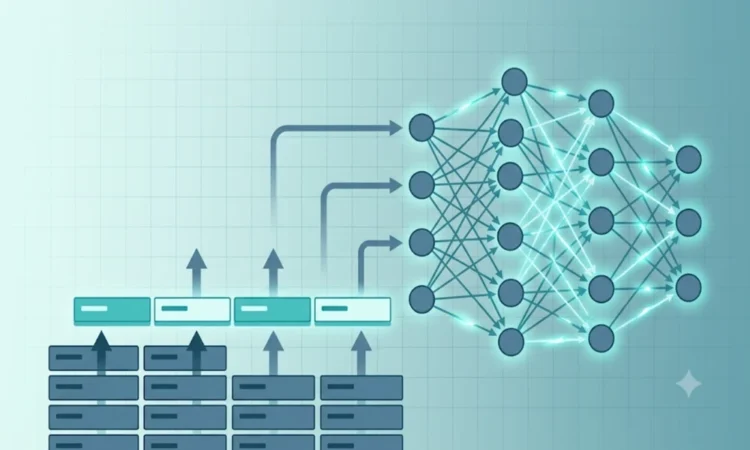
Ai data annotation is the craft of turning raw data into labeled examples a model can study. You box objects inside images. You write out spoken audio. You tag the mood of a sentence. You mark each frame across a clip. The model reads those labels and learns to copy the pattern.
And there sits the trap. A model never rises above the quality of its labels. It absorbs every call your annotators made, the sharp ones and the sloppy ones together. Mislabel a single class across a dataset and you have planted a permanent fault. The model will reproduce it, full of confidence, every time it runs.
Picture onboarding a new hire from a manual riddled with errors. They will follow it to the letter, wrong steps included. The cure is not a sharper hire. It is a cleaner manual.
The Hidden Cost of Cheap or Crowd-Sourced Labeling
Budget labeling reads like a bargain on the invoice. The bargain rarely lasts. You pay a second time through rework, quiet accuracy loss, and releases that flunk review. The anonymous-crowd route is the classic snare. No-name labelers, zero domain depth, no accountability, and no trace of who touched which file.
Here is the part that stings. Every bad label you ship has to be found, stripped out, and redone later, usually by your own engineers at full salary. That is the real bill. Now add the math. Let a 1 percent error rate slip past on a million-item dataset and you have 10,000 examples teaching your model the wrong thing. In medical imaging or self-driving, that is not a rounding error. That is a product recall waiting to happen.
Proof point Market analysis in 2026 attributes over 70 percent of model performance improvement to data quality rather than model architecture. The labels carry the load, not the network.
So the fix is not piling on more data. It is trusting verified data. And that is precisely where a proper ai data annotation platform pays for itself.
How a Verified AI Data Annotation Platform Solves the Root Cause
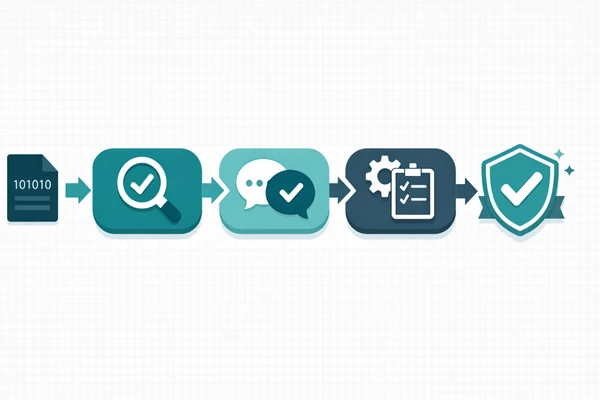
A genuine ai data annotation platform does not toss your data to a faceless crowd and cross its fingers. It sends each task to vetted domain experts, then inspects the result twice over. Inside Humyn Labs, every label clears peer review by fellow specialists first, then a central QC team. Each label gets reviewed, never sampled.
In practice, the quality stack breaks down like this.
- Domain-matched experts. Linguists, radiologists, engineers, paired to your data type instead of your cheapest quote.
- Double verification. Peer review plus a second QC sweep before a single label reaches you.
- Inter-annotator agreement. Two experts must land on the same call before a label counts. That agreement score shows you how dependable the data really is.
- Full audit trail. Provenance on every label, so you can defend the dataset to a regulator or a client without flinching.
That last piece grows more valuable each year. Regulators now expect transparent, auditable data handling, and so do buyers. A platform that tracks both expertise and accountability hands you a dataset you can stand behind. The full method sits on the data annotation services page.
Every Modality Your Model Needs, Labeled by Experts
Multimodal AI retired the old single-format labeling shops. Your model likely needs text and image and audio and video, all judged by one standard. Strong ai data annotation services cover every modality in one place, so your quality bar holds steady when the data type shifts.
Real projects pull from this full range:
- Image. Bounding boxes, polygon and semantic segmentation, keypoints, OCR, classification.
- Video. Frame-by-frame labeling, object tracking, action recognition, temporal segmentation.
- Voice and audio. Speech transcription, speaker diarization, emotion tagging, intent labeling.
- Text and document. Named entity recognition, sentiment analysis, document classification, relation extraction.
Why does the expert match carry so much weight here? Because a radiologist spots a mislabeled scan that a general labeler would wave straight through. A linguist catches the dialect a transcription tool mangles. Pair the annotator with the domain and label accuracy rises exactly where it matters. The same principle drives LLM evaluation and RLHF work, where preference data is only as trustworthy as the experts doing the ranking.
The Business Case: What Better Annotation Returns
Money is the language leadership speaks, so let us start there. Stronger ai data annotation returns higher accuracy, faster time to production, and fewer releases that collapse at review. It also undercuts rework once you count the hours your team loses scrubbing bad labels after the fact.
Most teams face the build-versus-buy choice below.
| Factor | In-house labeling team | Verified annotation services |
|---|---|---|
| Setup time | Weeks of hiring, training, and writing guidelines | Scoped and underway fast, proposal in 48 hours |
| Quality control | Rides on internal review, often just sampled | Every label double-checked, peer plus central QC |
| Domain coverage | Capped at whoever you managed to hire | Matched experts across medical, legal, code, and more |
| Scalability | A volume spike overwhelms the team | Scales across modalities with quality intact |
| True cost | Salaries plus rework plus failed launches | Predictable spend, far less downstream rework |
Now tie that to the numbers on your dashboard. Accuracy climbs. Launch timelines shrink. Customer trust holds because the model acts in production the way it did in testing. Ask yourself a blunt question: how many of your recent model misses trace back to the architecture, and how many trace back to the labels underneath it? That honest answer is the return on clean data.
How to Choose AI Data Annotation Services That Actually Scale
Plenty of vendors say expert. Far fewer can prove it. Run this checklist before you sign anything for ai data annotation services.

- Expert verification. Can they show you who labels your data and what they actually know?
- Modality coverage. Do they handle every data type you train on, or only the simple ones?
- Real QC. Do they check every label, or sample a slice and call it finished?
- Agreement metrics. Will they hand over inter-annotator agreement scores for each project?
- Turnaround and security. Quick start, clear timelines, and data handling you can audit end to end.
- Ethical sourcing. A workforce paid fairly and tracked out in the open.
Watch the warning signs while you are at it. The common mistakes that sink a project are easy to spot once you know them. Vague quality claims with no numbers attached. No named expert pool. No agreement scores. Picking on price alone and paying for it in rework. Miss those and your model foots the bill down the line. Buyer guides across 2025 and 2026 keep steering enterprise teams away from large faceless crowds and toward verified specialists for that exact reason. Humyn Labs was built around that move, with a Proof of Expert model that tracks every annotator’s skill and standing.
Stop Capping Your Own Accuracy
Circle back to the start. Your model is probably fine. The labels were the bottleneck. Accept that and the road ahead clears up fast. Repair the annotation layer and the same architecture you already own starts predicting sharper, launching quicker, and holding firm in front of real users.
Picture the after state. Your team ships high-accuracy labeled data at volume. Your models sharpen faster. Your costs drift down rather than up, because you stopped buying the same dataset twice. That is what verified ai data annotation delivers.
Ready to lift the ceiling? Take one step. Send the Humyn Labs team your modality, your volume, and your timeline. A scoped proposal lands back with you inside 48 hours, and a dataset you can defend follows soon after.
Frequently Asked Questions
What is ai data annotation and why does it matter for model accuracy?
Ai data annotation means labeling raw data so a model can learn from it. It matters because a model copies its labels to the letter. Clean labels teach right patterns. Faulty ones bake in errors that tuning cannot lift, which is why labeling quality sets your accuracy ceiling.
What does an ai data annotation platform do that an in-house team cannot?
An ai data annotation platform gives you matched domain experts, double verification, agreement scoring, and a full audit trail without the months of hiring and training an internal build demands. It also scales across modalities and sudden volume spikes while your quality holds.
How do ai data annotation services improve model performance?
Ai data annotation services raise the quality of the ground truth your model trains on. Better labels mean better accuracy, fewer production failures, and quicker launches. Since most performance gains now trace to data quality, sharper labels are the highest-leverage fix you have.
Which data types can be annotated?
Expert services span text, image, audio, and video. Think bounding boxes and segmentation for images, frame tracking for video, transcription and intent tagging for audio, and entity and sentiment work for text. Multimodal projects run under one shared quality standard.
How fast can a project start and what does verification involve?
Hand over your guidelines, modality, and volume, and Humyn Labs returns a proposal inside 48 hours. Verification means each label clears peer review by fellow experts, then a central QC pass, with agreement scores reported per project.
Is data annotation the same as data labeling?
Yes. In AI the two terms point to the same work. Some teams reserve labeling for plain classification and annotation for heavier tasks like segmentation or entity extraction, but both describe adding structured tags to raw data so a model can learn from it.


